Americans Embracing a “Chinese-Style Lifestyle”
From the booming popularity of bubble tea shops and hotpot restaurants on the streets of New York, to the growing appeal of classes in Tai Chi and Guzheng, to discussions on social media about travel to China and cultural experiences, more and more Americans have recently begun engaging with China and its culture in their own ways. "Living like a Chinese person" has become a trending phenomenon.
For many Americans, the first step into a "Chinese-style lifestyle" is often through food. Today, this experience has gone far beyond Americanized Chinese dishes such as General Tso's chicken and Orange Beef served in typical Chinese restaurants in the United States.
In New York, during dinner hours, long lines form outside the hotpot restaurant Mt. ShooTao near the Empire State Building. Its authentic Sichuan flavors have made it a first stop for countless diners experiencing genuine Chinese hotpot for the first time.
Chinese beverages, especially bubble tea, are also gaining popularity in the US. At HEYTEA's store in Times Square, New York, the shop is always crowded with customers.
Beyond food, from the flowing Eastern melodies of the Guzheng to the balance and rhythm embodied in Tai Chi movements, more and more Americans are embracing these deeper and more tranquil aspects of the "Chinese-style lifestyle."
During Asian American and Pacific Islander Heritage Month in May, a performance themed "Chinese Dance·Folk Music" was held in Manhattan, New York, attracting a large local audience. The performance featured original Chinese dance works as well as traditional Chinese instruments including the Erhu, Pipa, Guzheng, and Dizi.
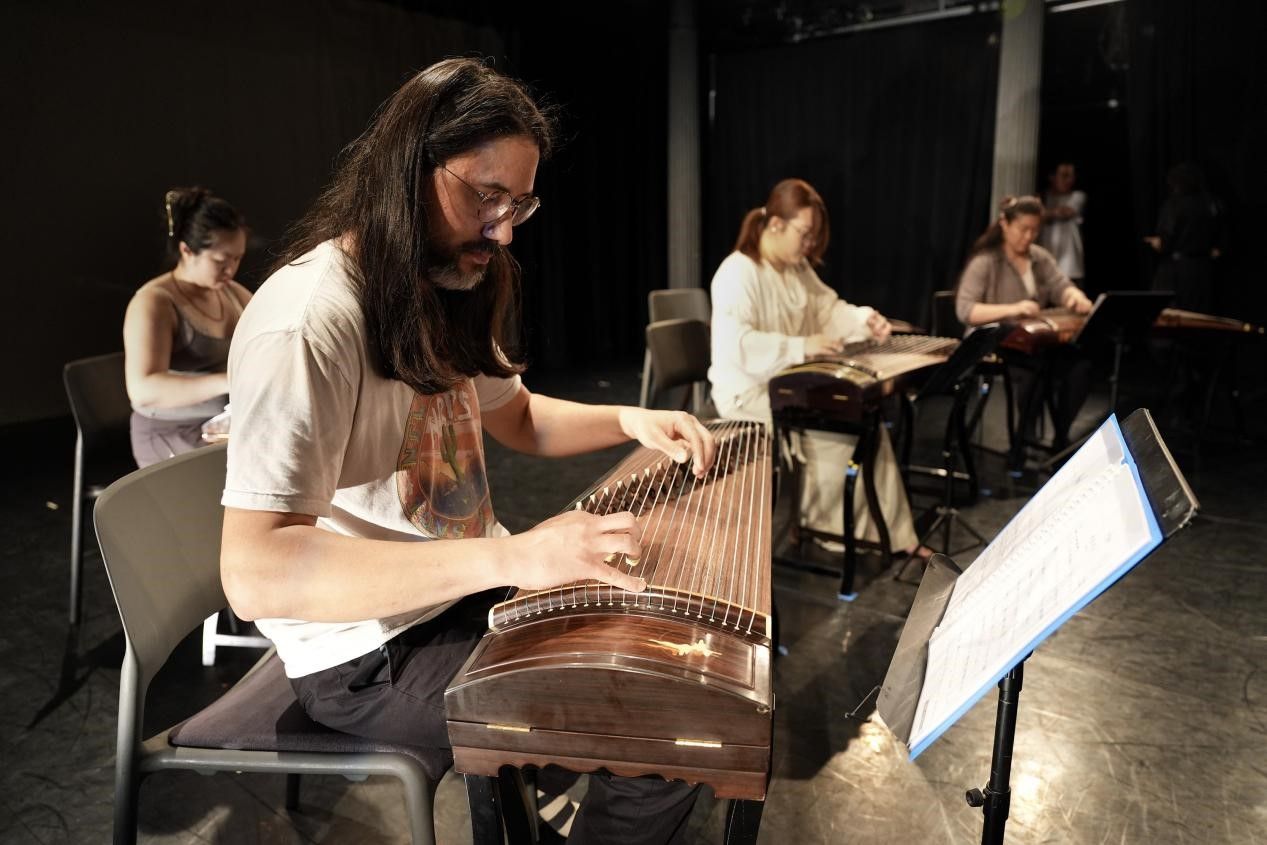
On May 10th, American musician Kevin Buckle was conducting a Guzheng performance rehearsal with his partner in New York. (CNS)
Kevin Buckle, an American musician who participated in the performance, said he had been studying the Guzheng for less than a year but already found it to be a highly expressive instrument. He had watched many related videos and noted that the instrument's tones have similarities with the intonation of the Chinese language. "Because of this, I gradually felt that the sound of the Guzheng seemed to be 'speaking Chinese,' with a unique sense of rhythm," he said.
Wang Yixin, one of the event's organizers and a graduate of the US-China Music Institute at Bard College Conservatory of Music, said that among the audience were American-born Asians, some of whom hoped to reconnect with their cultural roots, as well as many viewers with a strong interest in Chinese music and culture.
In November 2025, UNESCO designated March 21 each year as International Taijiquan Day. Learning Tai Chi has become a way for people around the world to understand Chinese culture.
At the "Sitan Tai Chi & Martial Arts" on Long Island, New York, Jason Edmond was practicing slow movements with his classmates.
"I first came into contact with Tai Chi about three years ago," Edmond said. He is a high school teacher in New York with experience in martial arts and dance. "I decided to practice Tai Chi to improve my physical fitness, and the process helped me better understand how to generate power."
"A mentor once told me that studying Chinese philosophy can help find more balance in life," Edmond said. He added that he has become deeply immersed in Chinese culture, and that the philosophy behind Tai Chi has had a positive impact on his life, offering wisdom on how to shift thinking and view the world. (CNS)