Budget Community Supermarkets Are Becoming a “Guidebook” for Foreigners Settling Into Life in Shanghai
Recently, a box of silken tofu priced at just 0.79 yuan (about 11 cents) turned an American living in Shanghai named Eugene into an online sensation — and unexpectedly introduced China’s “budget community supermarkets” to overseas audiences.
A few days ago, Eugene was shopping at a neighborhood supermarket near his apartment when he found himself stunned by the prices. Fruit, vegetables, meat — everything seemed far cheaper than what he was used to back home. But what really stopped him in his tracks was the 0.79-yuan tofu.
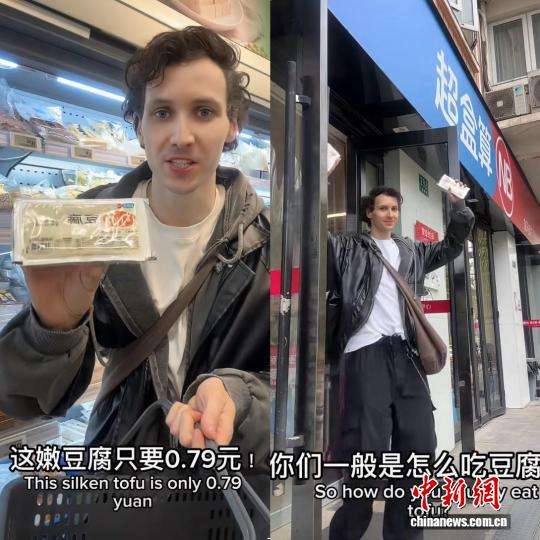
While shopping at a budget community supermarket in Shanghai, Eugene, an American living in the city, was “shocked” by a box of silken tofu priced at just 0.79 yuan RMB (about 11 cents).(Ecns)
Holding it up to the camera, he recorded a short video: “It was only 79 cents, so I bought it… but now, how am I supposed to eat this?”
The clip quickly went viral. Some viewers sincerely offered cooking tips, while others jokingly called it “Chinese pudding” and suggested dipping it in sugar. Many commenters from overseas were equally shocked by the price.
The now-famous tofu came from a local Shanghai supermarket chain known for its “everyday low prices and best-selling essentials.” By sourcing directly from factories and simplifying packaging, the stores keep costs low while offering affordable groceries and household goods.
For foreigners working or studying in Shanghai, the experience of these affordable neighborhood supermarkets can feel genuinely eye-opening.
Allen, who has been interning in China for more than a year, said she has come to appreciate the “everyday warmth” these stores represent. She loves browsing community supermarkets because the prices are clearly marked, the products are usually inexpensive, and many items come in smaller portions — perfect for foreigners living alone in China. Most importantly, the stores are often just a short walk away, making daily shopping easy without needing a car.
Allen said it feels more like a “guidebook” to everyday life in Shanghai. As she shops at neighborhood supermarkets more often, her habits have gradually changed. What began with buying everyday essentials like laundry pods has slowly expanded into trying authentic Chinese food. Before she realized it, she had naturally adapted to the rhythm of local life in Shanghai—and even learned how to cook Chinese dishes.
Today, budget community supermarkets are becoming increasingly common across Shanghai. Most stores are less than 800 square meters in size, but despite their compact footprint, they are surprisingly well-stocked, typically carrying around 1,500 carefully selected high-frequency items focused on daily meals and household needs.
During this year’s May Day holiday, data from a major online travel platform showed that Shanghai and Beijing remained top destinations for international travelers.
Meanwhile, according to Shanghai’s immigration authorities, the city has issued more than 10,000 foreign permanent residence ID cards — known as the “Five-Star Card” — in 2025 alone, ranking first nationwide. The numbers reflect Shanghai’s continued appeal to foreign residents.
Allen believes these neighborhood supermarkets are quietly reshaping the lives of foreigners like her.
“You walk in out of curiosity,” she said, “and walk out understanding a little more about how locals live.”(Ecns)