Zero Tariffs for Africa: Overseas Chinese Poised to Deepen China–Africa Trade Ties
Effective May 1, 2026, China has implemented a zero-tariff policy for all African countries with which it maintains diplomatic relations. Many overseas Chinese interviewed said that this move will expand Africa’s exports to China, optimize export structures, and support Africa’s industrialization—constituting a significant boon for African economies. They also expressed strong interest in becoming more deeply involved in China–Africa trade.
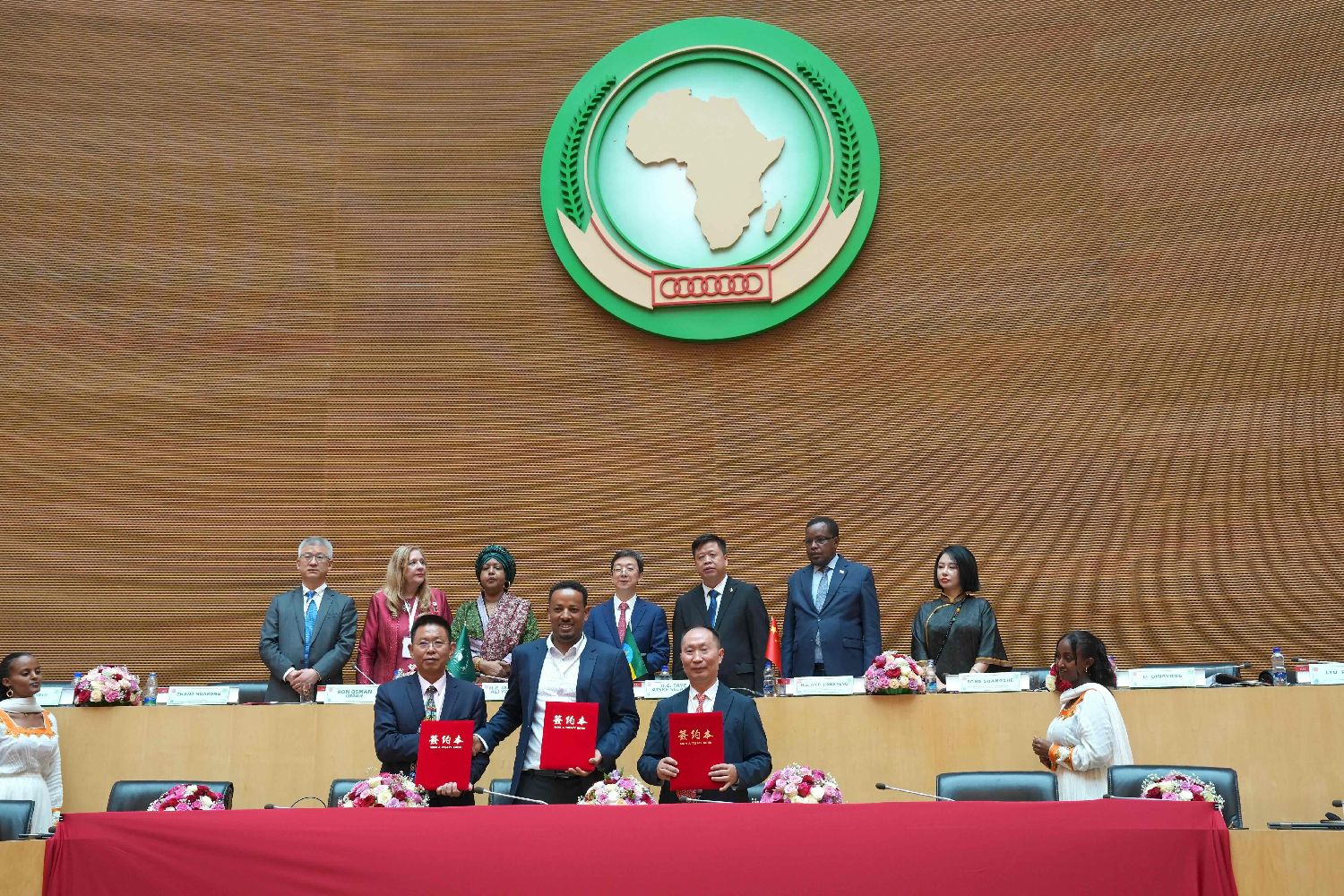
On April 21 local time, the First China-Africa Entrepreneur Summit was held in Addis Ababa, the capital of Ethiopia and the seat of the African Union (AU) headquarters.(source: CNS)
Ma Guanghui, Executive Vice President of the Egyptian Chinese Association, pointed out that previous tariff concessions between China and Egypt were largely confined to limited product categories, often subject to quotas and lacking policy continuity, making long-term industrial planning difficult for enterprises. By contrast, the new policy covers all tariff lines without additional conditions, offering businesses a stable and predictable framework for long-term development.
Ma added that Egypt has, in recent years, vigorously pursued an export-oriented development strategy while actively attracting foreign investment. The zero-tariff policy has fully energized the market, prompting Egypt’s industrial sector to shift its focus from traditional markets such as Europe, the United States, and the Middle East toward China. “We look forward to China–Egypt cooperation entering a new phase characterized by two-way trade flows, joint industrial development, mutual investment promotion, and coordinated supply chains,” he said.
Miles Gengxu Nan, Presidential Envoy and Special Advisor on Trade and Investment Affairs (Asia-Pacific) , remarked that the policy opens an unprecedented market window for African countries, enabling more products to enter the Chinese market. For Africa, this is not merely a trade opportunity but also a critical driver of industrialization and economic diversification—truly a major positive development.
“The most immediate change following the policy announcement has been a shift in market discourse,”Nan observed. “Previously, overseas Chinese enterprises focused on ‘what to sell to Africa.’ Now, the conversation increasingly centers on ‘what Africa can export to China.’” He noted that the zero-tariff policy is prompting companies to reassess their investment strategies in Africa, transitioning from a single-market focus to a model rooted in Africa, oriented toward China, and radiating across regional markets.
Lin Haiyan, President of the Mauritius Shanghai Chamber of Commerce, stated that local government officials and business leaders have highly praised China’s zero-tariff policy toward African countries, with many enterprises actively engaging Chinese partners. He believes the policy will help Mauritius expand its foreign exchange reserves and create employment opportunities, carrying significant implications for the country’s economic development.
“Following the implementation of the zero-tariff policy, Mauritius’s exports—such as sugar and seafood—will become far more competitive in the Chinese market, enabling businesses to improve efficiency and scale up operations,” Lin said. The Mauritius Shanghai Chamber of Commerce has already organized multiple training sessions and briefings to help member enterprises understand the policy’s practical application, and plans to arrange delegations to China to translate policy benefits into sustained long-term growth. (source: CNS)