Creative Overseas Chinese Youth Revitalize the Traditional Art of Sugar Painting
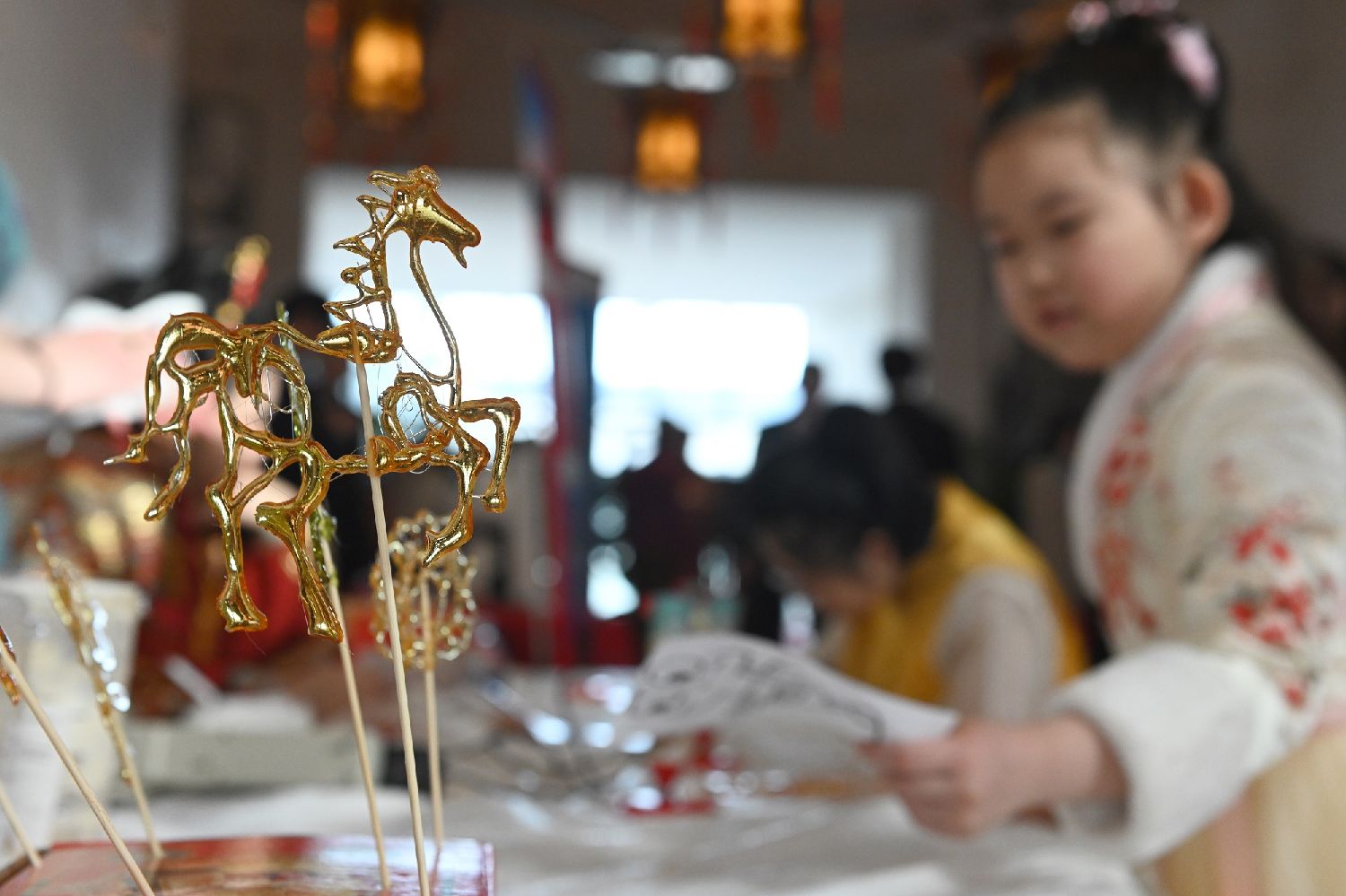
China's traditional sugar painting—using a ladle as a pen and molten sugar as ink—carries cherished childhood memories for many people. Today, some young overseas Chinese are breathing new life into this old craft by incorporating fresh elements and sketching out a "sweet world" on streets abroad.
"I used to love watching sugar painting at local fairs in my hometown of Shenyang when I was little. As I grew older, I began learning the craft from my grandfather," said Tian Yuanshi, a young overseas Chinese in Australia. Later, when she went to Australia to study, she brought her sugar painting tools with her. In her spare time, she sets up a stall at markets in Sydney, and is often invited to participate in Chinese community events and multicultural festivals.
Sugar Painting in Washington. (source: CNS)
Each time she sets up her stall, Tian carefully coordinates Hanfu attire and makeup. There is always a long line in front of her stand. "People describe the patterns they want, and I can create them on the spot. Locals especially love Chinese dragons and giant pandas—those are what I draw most often. My creative three-dimensional sugar paintings, such as peacocks and flower baskets, are also very popular," she said.
"Nowadays, more and more locals recognize sugar painting. Many can even identify the display at my stall as Chinese 'sugar painting,'" Tian added. To promote the craft, she offers hands-on classes at local primary and secondary schools, explaining the auspicious meanings behind sugar painting. After a few sessions, many students are able to create simple designs.
"I first showcased sugar painting in the United States at a bubble tea shop in Portland, Oregon. At first, customers didn't realize the sugar paintings were edible. After tasting the crispy and sweet texture, they found it incredible," said Huang Bingbing, a young overseas Chinese in the U.S. Since then, she has frequently demonstrated sugar painting at cultural events and commercial celebrations. Locals show great interest, often filming her work and sharing it on social media.
Building on traditional patterns, Huang has introduced locally popular animals such as hummingbirds, owls, and elk. She is also experimenting with breaking away from the traditional single amber color by adding touches of color, while using sugar sculpting techniques to create vivid and lifelike figures such as goldfish and cats.
"What attracts me most about sugar painting is the simple, pure joy it brings," said Wang Shanshan, a young overseas Chinese in the United Kingdom. The first time she made sugar paintings in the UK was at a party, where dozens of children gathered around her. Whether the spinning wheel landed on a simple butterfly or a complex dragon-and-phoenix design, the children watched in amazement as the sugar threads formed images, their faces full of delight.
Every step of sugar painting tests one's skill. Wang explained that controlling the heat while melting the sugar is crucial—too strong, and the sugar burns and turns bitter; too weak, and the sugar strands become limp. The wrist must move steadily, precisely, and quickly: a slight shake to drop the sugar, while lifting the hand to gather the strands. When outlining details, the sugar threads are as fine as hair, and turns must be decisive and clean.
"I incorporate local plants and animals that people here like into my sugar paintings, such as robins, butterflies, red roses, and tulips. I also create festive designs like Christmas trees and rabbits for holidays such as Christmas and Easter," Wang said. Looking ahead, she plans to combine sugar painting with tea tasting and traditional Chinese music to offer a richer cultural experience.(source: CNS)