"Color Walk" Gains Popularity in China: Young People Discover Urban Healing Through Colors
By Daming Lake, weeping willows sway; shepherd's purse glistens with morning dew; seasonal delicacies like mugwort green rice balls fill the air with spring flavor… Jia Xiaoyun, born in the 2000s, selected nine photos to create a collage and posted it on social media, showcasing the "results" of a "Color Walk" she did with friends.
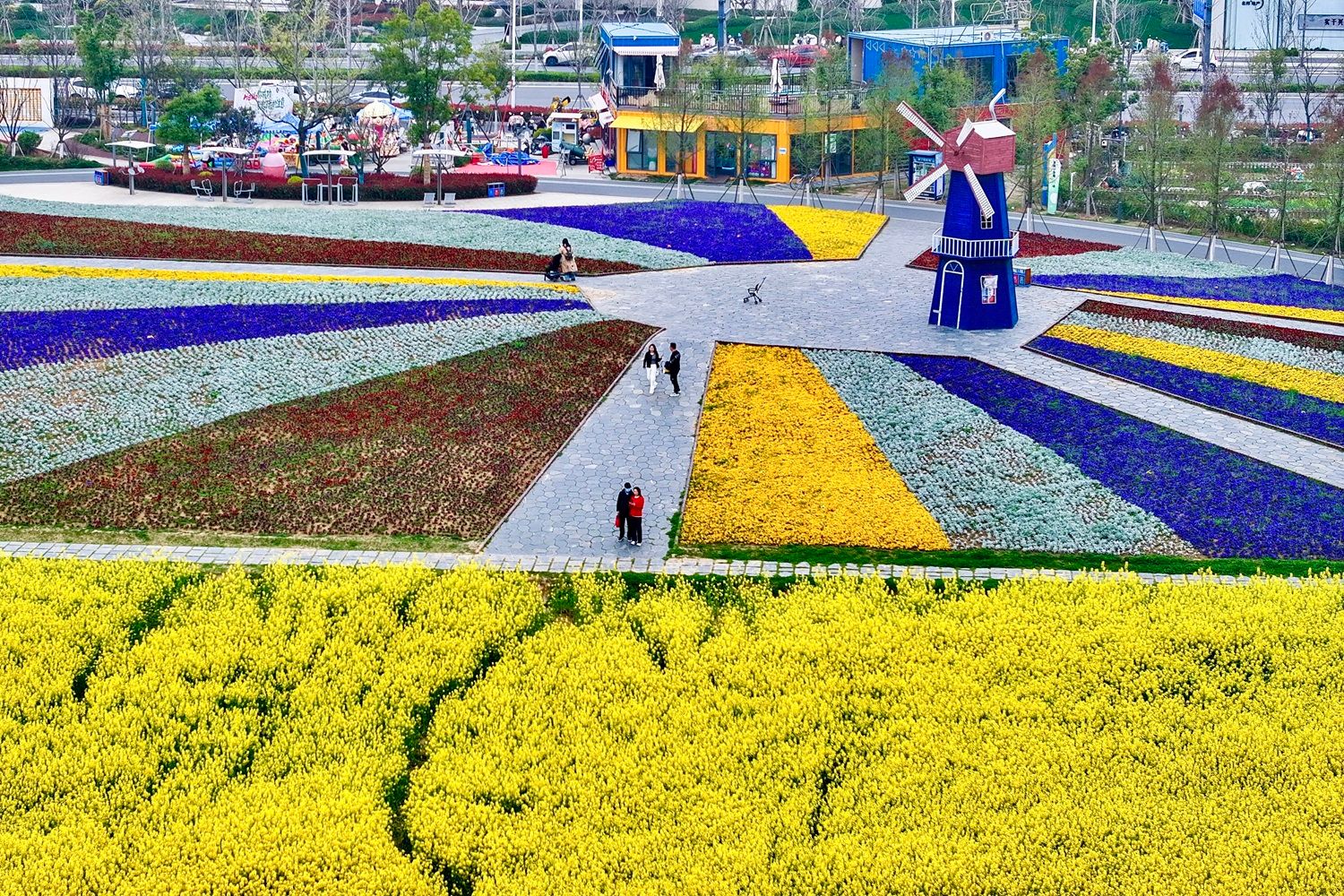
On March 26th, in a garden located in Feixi County, Hefei City, Anhui Province. (CNS)
"Color Walk" is a light, casual walking activity. The core idea is simple: before heading out, participants choose a color, then focus on spotting and recording objects of that color during their walk. Recently, topics related to "Color Walk" have been trending, becoming a new way for young people to heal and relax.
"We dress in a specific color and go out. When we encounter buildings or scenery in the same color, it feels like the city has prepared a perfect backdrop just for us," Jia said. Participants can also use their chosen color as a "guide"—whenever they spot something in that color, they simply head in that direction. "A 'Color Walk' isn't about how many photos you take; it's about actively connecting with the world, turning an ordinary day into a limited-edition experience."
A splash of bright yellow outside a café, colorful murals along a street, or vibrant flower fields in parks—these “high-saturation scenes” have become the most photogenic spots for "Color Walk."
The trend has also inspired new forms of social interaction. On social media, some people initiate "color dates," where two participants choose different colors to explore and later exchange their "color stories." Others share photography tips through "Color Walk," transforming casual snapshots into creative works. In this color-driven game, urban strolling evolves from simple wandering into a daily practice of observation and aesthetic appreciation.
The popularity of "Color Walk" has also become a new promotional window for cultural tourism departments and universities across China. Regions such as Hainan, Fujian, and Sichuan have been encouraging people to "experience spring through a Color Walk." At Tsinghua University, students have created a "purple romance" route, linking landmarks like the Ziqiang Science and Technology Building, campus buses, and stadium slogans—turning it into a fresh way to showcase campus culture and city identity.
"Colors themselves have emotional regulation functions—blue calms the mind, green relieves anxiety, and yellow boosts energy," said Shi Gaoyan, associate chief physician and psychotherapist at Jinan Municipal Mental Health Center. He noted that "Color Walk" resembles a form of "mindfulness practice", helping people detach from overwhelming information and focus on a simple, positive theme. "In expressive arts therapy, occupational therapy, and environmental psychology, color is a vital supportive tool and medium."
Shi added that the popularity of "Color Walk" reflects a growing trend in leisure activities that combine "physical exploration" with "sensory focus". In the fast-paced rhythm of urban life, people increasingly need moments of inner reflection—bringing a pair of eyes that can discover beauty, and "recharging the mind" right in their own neighborhood.