Karrin Taylor Robson Suspends Campaign for Arizona Governor, Narrowing GOP Field
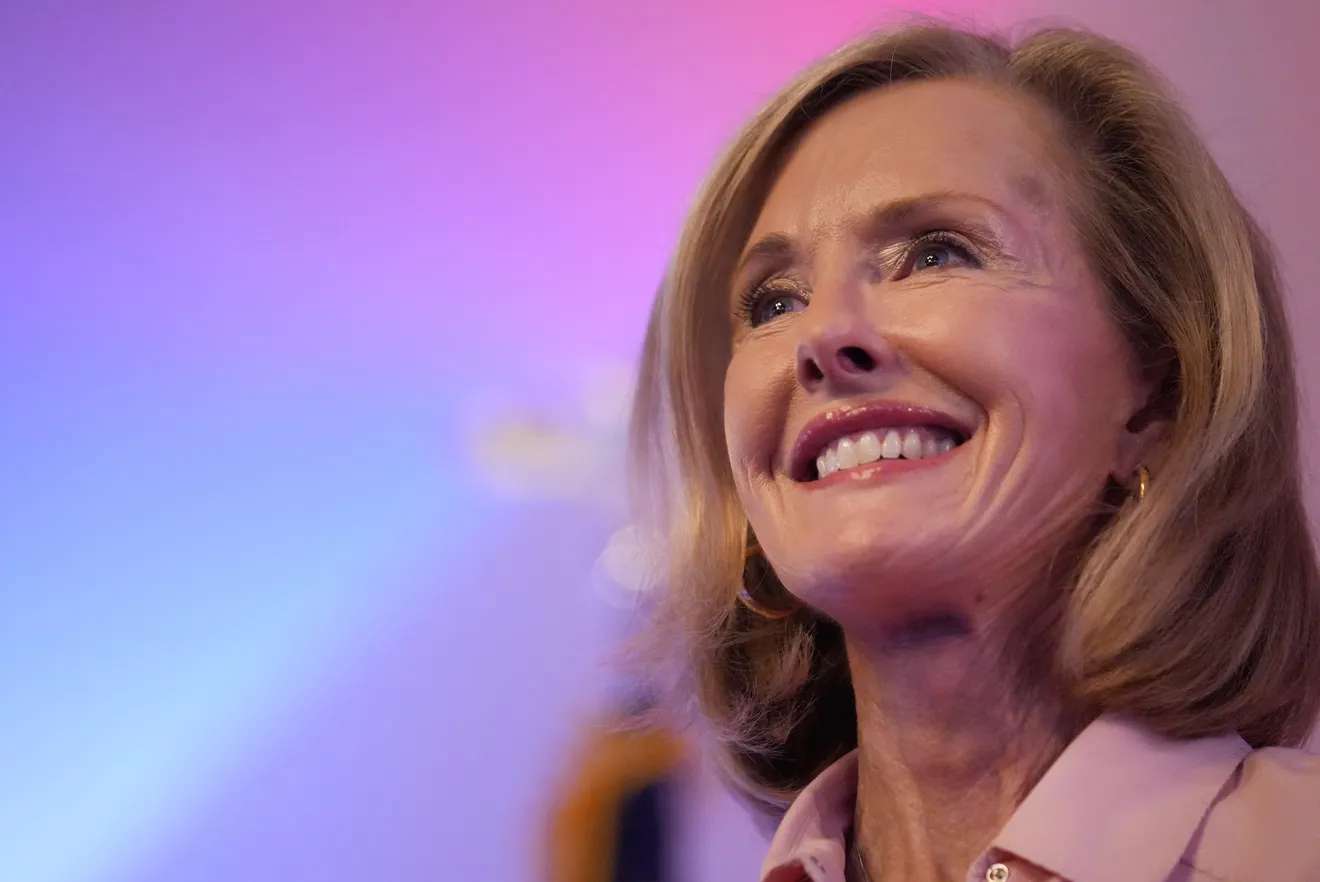
PHOENIX — Republican land use consultant Karrin Taylor Robson has suspended her campaign for Arizona governor, reshaping the GOP primary and leaving two sitting members of Congress to compete for the party’s nomination in 2026.
In a statement released Feb. 12, Taylor Robson said the decision followed “deep reflection, prayer, and many conversations with my family.” While expressing gratitude to volunteers and supporters, she warned against a prolonged and divisive primary battle.
“We cannot afford a divisive Republican primary that drains resources and turns into months of intraparty attacks,” she said. “It only weakens our conservative cause and gives the left exactly what they want: a fractured Republican Party heading into November. With so much on the line in 2026, I am not willing to contribute to that outcome.”
Although stepping back from the race, she added that she remains committed to “the fight for Arizona’s future.” She did not endorse either of her remaining Republican rivals.
Taylor Robson, who previously ran for governor in 2022 and finished second to Trump-backed candidate Kari Lake, formally launched her 2026 bid one year ago. Early in the campaign, she invested more than $2 million of her own funds and secured an endorsement from former President Donald Trump in December 2024, signaling what many believed could be a strong path to the nomination.
However, the dynamics shifted when Trump later offered a second endorsement to U.S. Rep. Andy Biggs, R-Ariz., in April. Biggs, a former state lawmaker with backing from conservative grassroots organization Turning Point USA, led Taylor Robson in most publicly available primary polls.
The race grew more complex in September when U.S. Rep. David Schweikert, R-Ariz., entered the contest. Schweikert, who had faced competitive reelection battles in his congressional district, was widely viewed as occupying a similar lane to Taylor Robson — appealing to more traditional Republicans rather than candidates aligned closely with Trump’s Make America Great Again movement.
Both Schweikert and Taylor Robson positioned themselves as candidates capable of defeating Democratic Gov. Katie Hobbs in the general election. In 2022, Hobbs defeated Kari Lake by roughly 17,000 votes, underscoring Arizona’s narrow electoral margins and its status as a key battleground state.
That loss fueled ongoing debate within the Arizona GOP about candidate electability. Several Trump-aligned Republicans who embraced conspiracy theories about the 2020 election were defeated statewide four years ago, prompting divisions within the party over whether to prioritize ideological alignment or broader appeal.
Taylor Robson, a friend of former Republican Gov. Doug Ducey and a member of a prominent Arizona conservative political family, often walked a careful line on election issues. She maintained that elections were not entirely fair but criticized some in her own party who promoted unfounded election conspiracies, calling them “grifters.” Those comments drew scrutiny from farther-right Republicans who questioned her commitment to the MAGA movement.
With Taylor Robson’s departure, Biggs and Schweikert now compete for the Republican nomination. The primary election is scheduled for July 21, moved up several weeks this cycle to comply with updated election deadlines.
Gov. Hobbs, who is seeking a second term, faces no significant Democratic primary challenger, allowing her campaign to focus its resources on the general election. Political observers note that this advantage could prove significant in a race expected to be closely contested.
Adding another variable to the race, the newly formed Arizona Independent Party has fielded candidate Hugh Lytle. As a third-party contender, Lytle could siphon votes from either major party nominee — a potentially decisive factor in a state where statewide races are often decided by slim margins.
As the GOP field narrows, the coming months will test whether Republican voters coalesce around a candidate capable of unifying the party and competing effectively in November. In Arizona, where recent elections have been decided by only a few thousand votes, unity — or the lack of it — may determine the outcome.